
Dance, and the Texas dance community around it, saved my life.
I grew up a Texas girl, the kind that learns early how to move to music whether there’s room for it or not. Some of my first memories are standing on my daddy’s boots in San Angelo, trying to keep time while he guided me across a floor that felt bigger than the world. That’s where it starts for a lot of us, not in a studio, not in a lesson, but in a moment that sticks.
My family is eight-generation Texas, and I was raised with a strong sense of place—what it means to belong somewhere, to carry something forward whether you realize it at the time or not. Back then, I didn’t call it heritage. It was just life.
I went on to study education and theater at San Angelo State University, and like a lot of people, I stepped away from dancing for a while. Life gets structured. You follow a path. You don’t always notice what you’ve set aside.
In 2004, everything changed.
I was in a serious automobile accident. My close friend was killed. My brother and I were both badly injured, me with a broken neck. There are moments when your life divides cleanly into before and after, and you have to decide what you’re going to carry with you into whatever comes next.
During my recovery, I moved to Austin. And that’s where something unexpected happened. The dance, and the people around it, gave me a way back.
At first, it was small. A night out when I could manage it. A song or two. A few careful steps. But the Austin dance community met me where I was. There was no pressure to be anything but present. You showed up, you learned, you moved, and somebody was always there to meet you in that moment.
And over time, that mattered more than anything.
Dance, and the Texas dance community around it, saved my life.
Not all at once. Not dramatically. But steadily. It gave me structure when everything else felt uncertain. It gave me connection when I felt alone. It gave me a way to move forward, literally and figuratively, when standing still wasn’t an option.
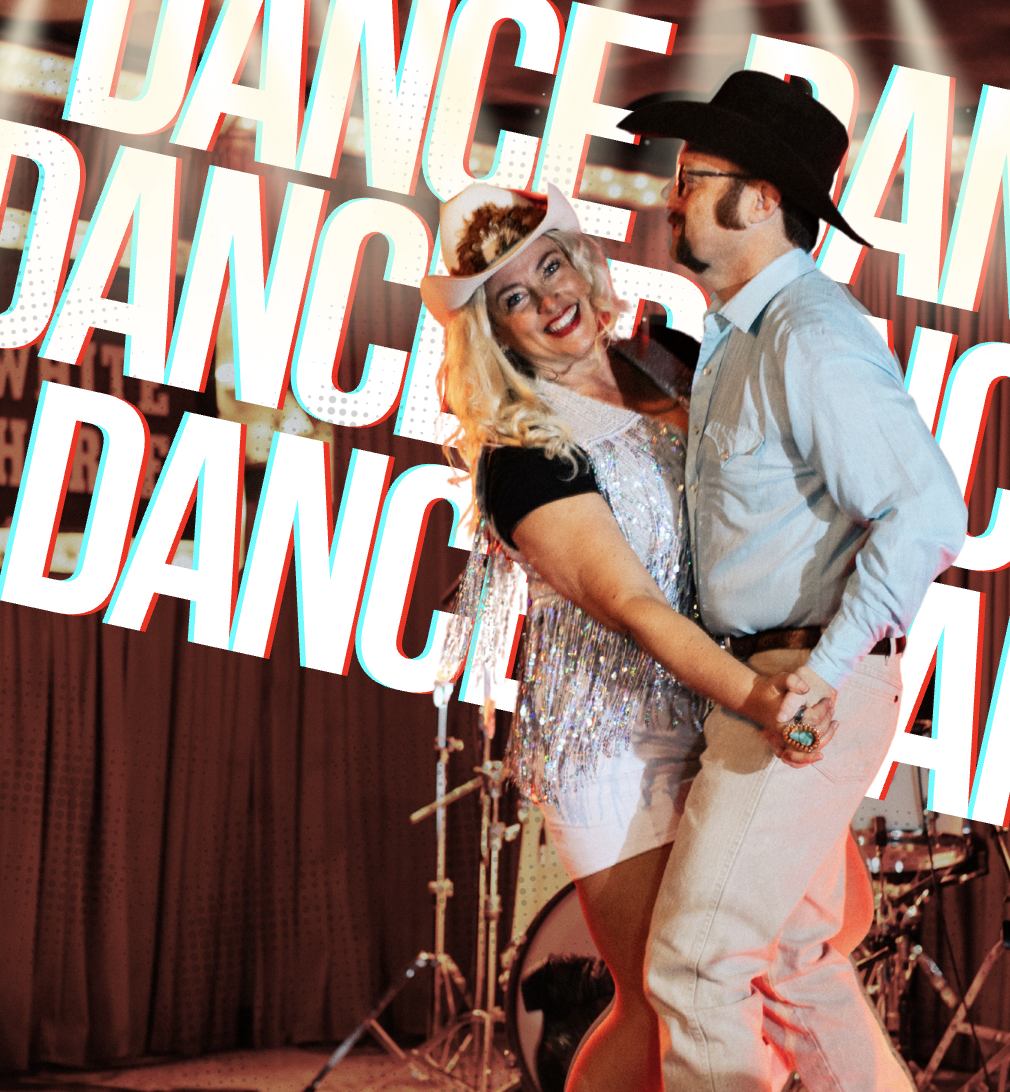
By 2008, I was dancing regularly again, and I met my partner and fellow instructor, Marlon McAllister. Together, we saw something missing in Austin. The city had music, energy, and people ready to engage, but the kind of grounded, accessible Texas Two-Step instruction that connects people to the tradition wasn’t as visible as it could be.
We decided to build it.
We started teaching at the White Horse, and what began as a simple class grew quickly. People showed up, not just to learn steps, but to become part of something. To understand how to move through a room, how to connect with a partner, how to take part in a tradition that’s bigger than any one of us.
Those classes became a community.
Since then, I’ve been teaching for more than fifteen years. I’ve had opportunities that still surprise me when I think back to where I started. In 2008, we performed at the Smithsonian Institution and the Kennedy Center. I’ve received recognition for my work, and I’ve had the chance to teach the Texas Two-Step beyond Texas,sharing something that feels immediately familiar to people, even when it’s new to them.
Because it’s that kind of dance.
It meets you where you are.
Now, as a mother, I think about this differently.
I think about my daughter, Betsy, and what she will inherit, not just from me, but from Texas. Not just stories, but living traditions. Something she can step into, the same way I did, and find her own way forward.
That’s what the Texas Two-Step represents to me.
It’s not just a dance. It’s a way Texans meet each other. It’s a way we carry something forward without needing to explain it too much. It lives in our music, our dance halls, our small spaces and big ones, and in the people willing to step out and try.
I believe in Austin. I believe in Texas. And I believe that what saved me, this dance, this community, this shared movement, deserves to be recognized as part of who we are.
I’ve spent my life returning to it, rebuilding through it, and teaching it.
And I’m ready to carry it forward, so the next generation, including my daughter, has something just as real to step into when they need it most.